Be yourself; Everyone else is already taken.
— Oscar Wilde.
This is the first post on my new blog. I’m just getting this new blog going, so stay tuned for more. Subscribe below to get notified when I post new updates.
Be yourself; Everyone else is already taken.
— Oscar Wilde.
This is the first post on my new blog. I’m just getting this new blog going, so stay tuned for more. Subscribe below to get notified when I post new updates.
What are Google Ads? “Google Ads is a digital advertising solution that helps you reach this audience and transform them into valuable customers”(Google Skill-shop).
Why do we need Google Ads? In order to grow your business, you need some sort of marketing and nowadays online marketing is best mode as more and more people use internet in their daily life. Google Ads provide technology for businesses to promote their businesses on various online platforms. “With Google Ads, you get access to a broad range of advertising products designed to help you reach customers in the moments that matter”(Google SkillShop).
How can Google Ads help in achieving Business goals? Drive Sales: Grow online, in-app, in-person, and over-the-phone sales. Get Leads: Boost conversions by encouraging people to take action. Increase website visits: get the right people to visit your website. Influence consideration: encourage people to explore your products and services. Build awareness: Reach a broad audience and maximize exposure. Promote your app: Increase installs and interactions with your app.
Google Ads are based on three main fundamentals principles:
1) Relevance: Google Ads helps you connect with the right people, at the right time, with the right message. Your ads can appear on Google Search, YouTube, and more, just when someone is looking for products or services like yours. You can also customize options, such as keywords and location, to get in front of the most relevant customers (Google SkillShop).
2) Control: Google Ads gives you complete control over your budget. You choose how much to spend per month, per day, and per ad. Based on your settings, Google Ads uses a lightning-fast auction to determine which ad to show. If you want to change your strategy, you can easily adjust your ad, modify your budget, or pause and restart a campaign (Google SkillShop).
3) Results: Pay only for results, like clicks to your website or calls to your business. Our measurement tools make it easy to see how your site, apps, and ads are performing. Plus, smart technology lets you create, manage, and optimize your campaigns so you can get the most out of your investment (Google SkillShop).
Google Ads Campaign: Businesses can be supported by making Google Ads Campaigns and there are 5 types of campaigns that google offers. These are Search, Display, Video, Shopping, and App. Each of these provides a specific objective and cab be choose to satisfy your business/marketing needs. Following is the link to google skill shop where you can find detailed information about all these 5 campaigns. https://skillshop.exceedlms.com/student/path/18163/activity/25485?skip_interstitial=true
What do users want? To get the most out of google ads, it is important to understand what uses or potential customers are looking for. There are three main things that people look for: Relevance information, Info based on their moment, and Ads that contribute to their experience.
Ad Extensions: There are numerous ad extensions available at Google that can add more value to your advertisement. These ad extensions are additional information that expand your ads to make them more valuable. There are various types of extensions such as universal site link extensions, Callout extensions, Structured snippets, Location extensions, Call extensions, Price extensions, Dynamic extensions etc.
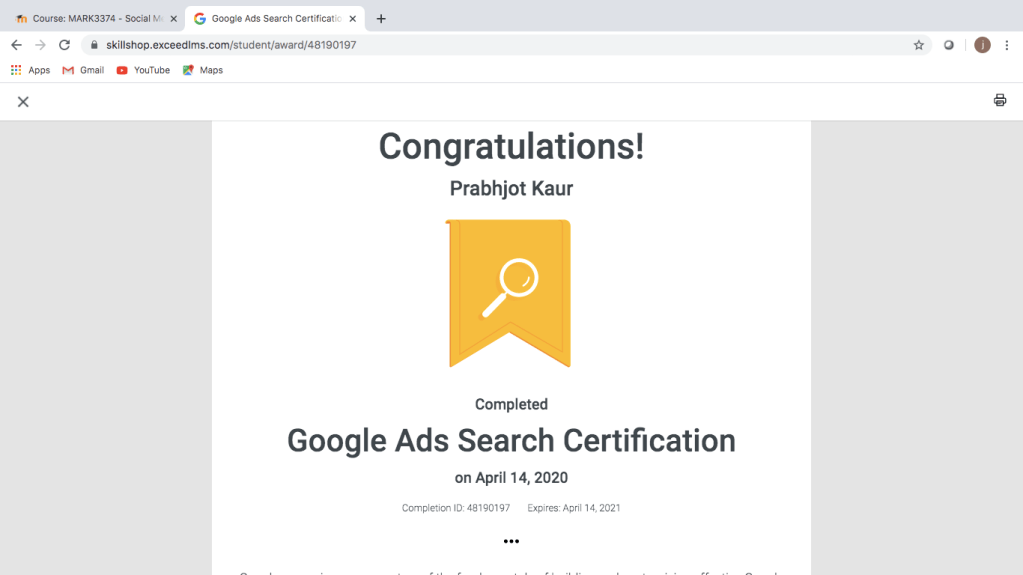
Conclusion: I have learned so many things through google skill workshop and got my certificate and below is the screenshot go that certificate. There is a lot more about google ads which is hard to summarize in this blog. I did not have any experience earlier with google ads however, now i have a better undersatnding of how these ads works and how business can get benefit from these. I am an accounting student however if i get a change in future to work with marketing department of an organization i would definitely apply this new knowledge there.
Reference Google SkillShop (n.d.). Google. Retrieved from https://skillshop.withgoogle.com/
“Social media is a Business strategy” (Gil, 2019). It is important to that what networks to join, when to post, how you measure success should be tied to business objectives. If you want to make your business successful then be strategic and make data informed decisions accordingly. One of the Important take away from this LinkedIn learning video is What metrics to use on social media such as Facebook, Instagram, YouTube and twitter. It includes content, community, consistency and conversion and what roles these play in social media marketing (Gil, 2019).

Align Social Media and Business Strategies – Aligning social media and business strategies is crucial for businesses nowadays to reach out to customers and understand their purchasing behaviour. For this to happen businesses need to figure out the following first:
Four Pillars of a Social Media Strategy
Content- What users see from your brand on social media. Community- The users who regularly consume and engages with your content Consistency- How often you post determines how often you appear in user’s news feeds Conversion- The actions users take when they engage with your brand: click, comment, or share (Gil, 2019).
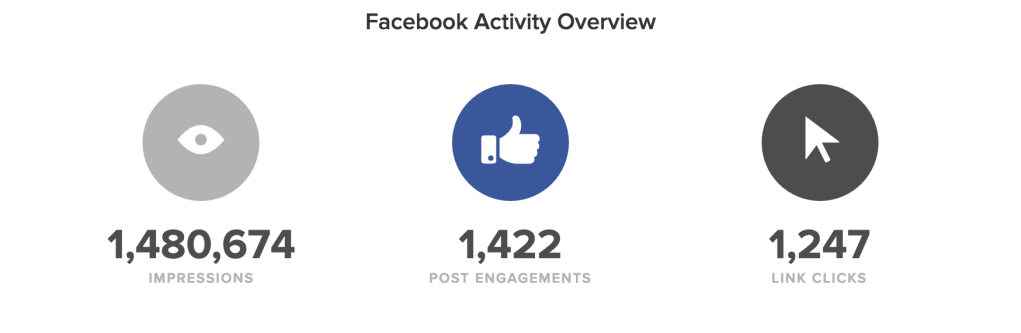
What Metrics You Should Measure: When businesses market themselves on social media they look for the following measurements on their posts:
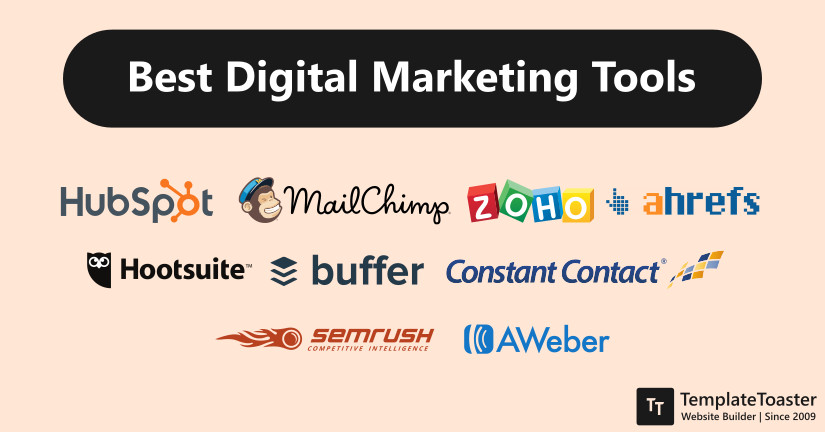
Tools to Measure ROI: These tools vary according to the size of the organization. Following are some examples of free and premium tools:
Decoding Social Media Analytics: In the video by Gill, he mentioned different platforms such as Facebook, Twitter, LinkedIn, Youtube, and Instagram. There are some points to track Facebook insights such as reach, impressions, and engagement. According to Gil, (2019), this data can be exported to excel sheet and needs to be checked weekly. Facebook can also be a place for you to set up a store. You can add a product and give a price, description and the link to take the customer to your website to buy the product (Gil, 2019).
Instagram measures ROI by likes, comments, shares, followers, and bookmarks. As any social media platform, the more consistent you post the better analytical responses there will be and if you are posting more, your company will start appearing in hashtags which will help you reach an even larger number of people.
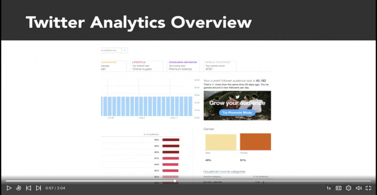
Twitter is a search engine that updates in real time. Businesses can detect the keywords and phrases used by their target audience. This will allow the company to become more relevant to their consumers. Top mentions, followers, and content are main insights of twitter. Following is an image/screenshot from the video about Twitter analytics.
Facebook ad options to drive new customer Acquisition Facebook page has the option to promote your business. You need to make some selections such as objective, location, etc.(Gil, 2019).
Run Targeted Ads: Run targeted ads based on their location, age-range, and location. You can also customize your ad’s visuals.
Lead Generation Form: In B2B and service based business, you can collect lead forms directly from your Facebook page. Age, demographics, locations, and interests are important factor to collect (Gil, 2019).
Leverage Facebook Insights: Under posts option, you can sort through your best performing posts based on reach, comments, engagement, and clicks. As a growth hack you can revive or reengage old posts to bring them back to life by commenting or liking your old posts (Gil, 2019).
Facebook Ecommerce Integration
Create engaging Instagram content based on Analytics
Formula for YouTube Monetization
Increasing website visits using Twitter Cards: To increase website views eye catching visuals are required along with catchy and inviting URL title. “A Twitter card is content designed to give users a rich media experience whenever tweets contain links to a site’s content. Twitter has various card types to show content previews, play video and increase traffic to sites” (Twitter Card).
When to Use Twitter Cards: Twitter Cards can be used while posting blogs, Youtube videos, and for special offers and promotions.
Drive Sales with Instagram stories: Following are the keys for Storytelling-
How to be Seen by Local Instagram
Writing Short and engaging posts: following are the tips to write posts on instagram.
Social media is critical for businesses nowadays and it is important to align your business strategy with the customers on social media. I am not a marketing student thus not really have any personal experience with companies using social media tools. However, I know have a better understanding of its important for businesses. For me, one of the Important take away from this LinkedIn learning video is What metrics to use on social media such as Facebook, Instagram, YouTube and twitter. It includes content, community, consistency and conversion and what roles these play in social media marketing.
Gil, C. (2019, October 09). The ROI of social media marketing [Video]. Retrieved from https://www.linkedin.com/learning/social-media-marketing-roi-2/the-roi-of-social-media-marketing?u=2109516
Twitter Card. (2019). Sprout social. Retrieved from https://sproutsocial.com/glossary/twitter-card/
In this video by Megan Adams (2018), “Social Media Marketing: Social CRM” I got to learn about social CRM fundamentals- Adding Social CRM to your strategy

In this video by Megan Adams (2018), “Social Media Marketing: Social CRM” I got to learn about social CRM fundamentals- Adding Social CRM to your strategy
All the information is collected from the social media sources and uses CRM analytical tools in the strategy
1) Marketing- Social listening to learn about your online audience’s behavior, i.e. sproutsocial.com
2) Sales- Understand where prospects are online and what they’re discussing
3) Customer service and support- Real-time, multi-channel support
4) Customer experience- Understanding what your customers’ needs and wants are and creating an exceptional, unique experience for them.
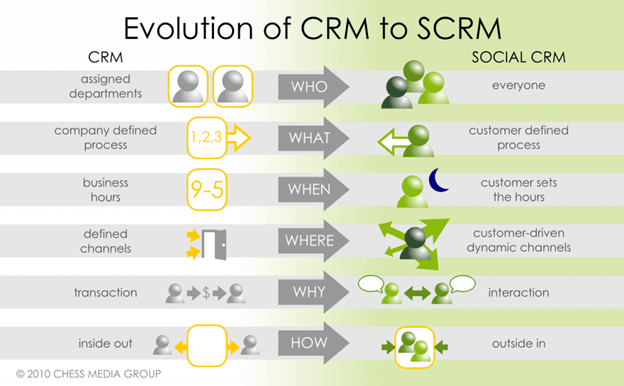
Traditional CRM and social CRM are combining as customers spend more time online and on different social media channels like Facebook, LinkedIn, Instagram, and Twitter. Following is a picture showing the evolution of Traditional CRM to Social CRM.
Budget
Key Takeaway:Work with the customers that love your brand by giving them a voice and a platform.
Connect Your Content with Prospects
What is Social CRM? It is a strategy supported by social media, online tools, and technology that enables organizations to better engage with their customers. It helps to create a culture of advocacy, empowering your customer to shape their own experience with your organization. The right strategy and set of social CRM tools will help your organization use all of this social information to establish meaningful and transparent relationships with your customers (Adams, 2018).
How does it work?
Examples:
The new way of marketing CRM is used for tracking, measuring, and analyzing behavior over social landscape is becoming more difficult. According to traditional CRM, it build systems for customers to interact with whereas new social CRM build systems that allows customers to choose the way they interact with the organization (Adams, 2018).
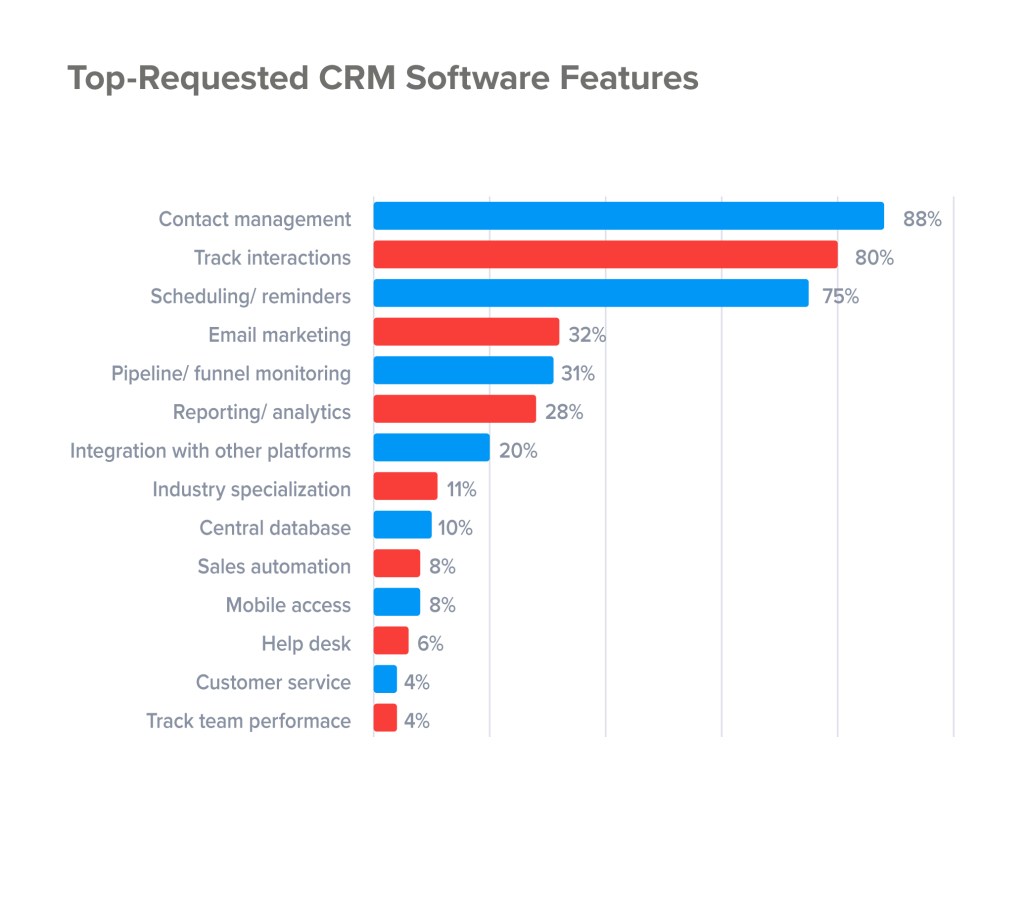
Benefits of Social CRM
Choose a social CRM platform A social CRM platform gives your organization all the tools it needs to grow, all in one central location. There are 3 main reasons to use a social CRM platform (Adams, 2018).
What to look for in a Social CRM Platform
CRM Platform must have following elements to it:
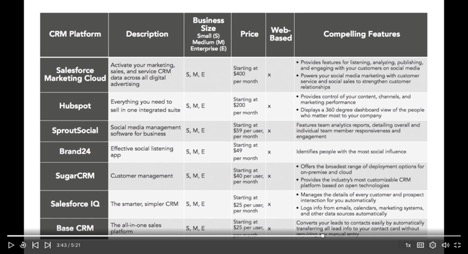
Choosing a Platform after shortlisting few platforms
Allocating Resources: Your social CRM success will depend upon organizational support and allocation of resources
Leadership Support:
Organizational strategy and culture
Build your Social CRM Team
Training
Monitor and Evolve

Branding – a social and effective social CRM strategy builds an organization’s brand while creating fans and brand ambassadors. A brand is an overall impression resulting from communication and marketing methods of a product or company that distinguishes it form competitors.
Brand Includes:
It has two factors – Humanization and personalization
Humanization- It includes having an easy to connect with personality versus being a faceless entity.
Personalization- it includes allowing customer sot choose and shape their own experience with your brand.
Tracking Brand Consistency
Supporting your Customers
Social Media Optimization
Rules of Engagement Laying out clearly defined rules will set the standard for every prospect and customer interaction. Defined rules of engagement gets your organization on the same page in all of their social CRM activities while invoking trust and transparency on the customer side (Adams, 2018).
Communicate How to be Reached

All the information is collected from the social media sources and uses CRM analytical tools in the strategy
1) Marketing- Social listening to learn about your online audience’s behavior, i.e. sproutsocial.com
2) Sales- Understand where prospects are online and what they’re discussing
3) Customer service and support- Real-time, multi-channel support
4) Customer experience- Understanding what your customers’ needs and wants are and creating an exceptional, unique experience for them.
Traditional CRM and social CRM are combining as customers spend more time online and on different social media channels like Facebook, LinkedIn, Instagram, and Twitter. Following is a picture showing the evolution of Traditional CRM to Social CRM.
Budget
Key Takeaway:Work with the customers that love your brand by giving them a voice and a platform.
Connect Your Content with Prospects
What is Social CRM? It is a strategy supported by social media, online tools, and technology that enables organizations to better engage with their customers. It helps to create a culture of advocacy, empowering your customer to shape their own experience with your organization. The right strategy and set of social CRM tools will help your organization use all of this social information to establish meaningful and transparent relationships with your customers (Adams, 2018).
How does it work?
Examples:
The new way of marketing CRM is used for tracking, measuring, and analyzing behavior over social landscape is becoming more difficult. According to traditional CRM, it build systems for customers to interact with whereas new social CRM build systems that allows customers to choose the way they interact with the organization.
Benefits of Social CRM
Choose a social CRM platform A social CRM platform gives your organization all the tools it needs to grow, all in one central location. There are 3 main reasons to use a social CRM platform
What to look for in a Social CRM Platform
CRM Platform must have following elements to it:
Choosing a Platform after shortlisting few platforms
Allocating Resources: Your social CRM success will depend upon organizational support and allocation of resources
Leadership Support:
Organizational strategy and culture
Build your Social CRM Team
Training
Monitor and Evolve
Branding – a social and effective social CRM strategy builds an organization’s brand while creating fans and brand ambassadors. A brand is an overall impression resulting from communication and marketing methods of a product or company that distinguishes it form competitors (Adams, 2018).
Brand Includes:
It has two factors – Humanization and personalization
Humanization- It includes having an easy to connect with personality versus being a faceless entity.
Personalization- it includes allowing customer sot choose and shape their own experience with your brand.
Tracking Brand Consistency
Supporting your Customers
Social Media Optimization
Rules of Engagement Laying out clearly defined rules will set the standard for every prospect and customer interaction. Defined rules of engagement gets your organization on the same page in all of their social CRM activities while invoking trust and transparency on the customer side.
Communicate How to be Reached
1) Social bio: Include appropriate customer support numbers and emails.
2) Website and social channels: Make it clear how to make contact and the experience response time.
Create Social Media Support Accounts
Respond in a timely Manner
Creating a social CRM strategy to aid in timely response:
Be Proactive in your responses
Use a Social Media Monitoring Tool
Humanize Your Conversation
Know When to take it offline
1) Move to secure communication platforms when appropriate
2) Always keep privacy and safety in the forefront
Get Feedback Often
Campaigns This new way of marketing is a powerful opportunity for marketers to engage with their customers on the platforms they are active on, in a targeted and highly effective way (Adams, 2018).
Focused targeting – Creating highly individualized and targeted messages that strongly appeal to the customers
Segmentation- Aggregating customers or prospects into segments, such as behaviors.
Personalized Content- Individual and tailor your content to directly speak to your customers.
Iterate- Experiment, analyze, tweak, repeat, iterate on what doesn’t work and repeat what does.
Social Media channels- upload CRM data to social channels like Facebook or Twitter in order to run targeted ad campaigns (Adams, 2018).
Identify Influencers: Using influencers in your marketing strategy is the practice of building relationships with the people who can build relationships for your brand. First, look at audience and advocacy (Adams, 2018).
How to find influencers?
Social media monitoring: use social listening tools like hootsuite.com or klout.com; larger CRMs like HubSpot also have these capabilities.
Hashtags: Identify hashtags relevant for your brand and see who is talking about them.
Google Alerts: Set alerts for specific keywords, services, and products.
Blogger outreach: Locate influential bloggers in your niche.
Working with your influencers
Encourage content creation:
Provide product giveaways and discounts:
How to engage with prospects successfully? Paint a complete picture of who they are.
Understanding your prospects
Connect Your Content with Prospects
Keep Content on Message
Keep Content Engaging
Know when to pitch and what to not
Use a Social CRM Tool
Customer service
It is the interaction between a customer and the company, usually through traditional channels like phone or email, to help resolve a customer request or issue.
Social CRM
Best Practices Helps build a scalable, repeatable, and automatic customer support process addressing issues that surface via social channels.
Handling Negative Feedback
1) Monitor internet for activity
2) Bring relevant postings into customer support queue
3) Facilitate employee collaboration
4) kick off resolution with the customer
Process Documentation: Documents that support a process, the activity of process discovery, process mapping software and policies, as well as procedure templates.
Business Process Success Criteria
1) Ownership
2) Goals
3) Metrics
4) Interfaces
5) Documentation
6) Integrity
7) Alignment with business vision
Start with the Roadmap
Impact to Specific Organizational Process
Choosing the Right Tools
Analytics- Main takeaways
Focus On customer Feedback
Behaviour and Psychographics
Essential Analytics
Analytics help you gain a deeper understanding of your customer so that you can better meet their needs (Adams, 2018).
The right social CRM tools and strategy will empower your organization in establishing meaningful and transparent relationships with your customers. It is important to understand your organizational goals about social CRM. What social CRM tools will you require? Above are the important tips that I have learned from the video by Adams. To provide an example, I would say I work in service industry and I have seen the use and advantage of using data and information collected from customers to enhance the business and run it effectively and efficiently. To put it in a nutshell, Social CRM is a tools that helps an organization to better engage with its customers for the sake of customers and the organization as well.
Adams, M. (2018, April 11). “Social Media Marketing: Social CRM” [Video]. Retrieved from https://www.linkedin.com/learning/social-media-marketing-social-crm/welcome?u=2109516
Malczan, N. (2019, May 28). What is Social CRM and how can it help your B2B efforts. [Image]. Retrieved from https://www.engagebay.com/blog/what-is-social-crm/
Fletchers, R.F. (2019, January 25). How to Give Negative Feedback. [Image]. Retrieved from http://executivesecretary.com/how-to-give-negative-feedback/
Puri, R. (2015, August 13). 3 Creative Ways to Choose a Brand Name.[Image]. Retrieved from https://thenextweb.com/insider/2015/08/13/3-creative-ways-to-choose-your-brand-name/
Plaksij, Z. (2020, February 28). CRM Benefits. [Image}. Retrieved from https://www.superoffice.com/blog/crm-benefits/
LinkedIn is a great platform for people to connect with the business world especially with recruiters. In this Video by Oliver Schinken (2018), we got to learn about the importance of LinkedIn and how students can create their LinkedIn profile to seek more career opportunities.


1) Sign up first if not using it. 2) Add a photo and background- To help to profile to stand out – Click camera icon- choose pic – edit (zoom in or out) – Option for filters and quality – apply – Option to change it anytime we want – Use a recent picture – Consider proper framing – Quality of picture- no blurry pics – Professional pic – Customize Background
3) Personalize your Headline – Customize it -reflect message that you want to convey. – Define who you are and what you are trying to achieve.
4) Add a Summary – Put a lot of time and though in it – Opportunity to share your experience, your abilities, add key words Following is the summary of qualification from my Resume

ABOUT ME I am an enthusiastic, self-motivated, reliable, responsible and a hardworking individual. I am a mature team worker and can adapt to all challenging situations. I am able to work well both in a team environment as well as using own initiative. I am able to work well under pressure. I have an active and dynamic approach to work and getting things done. I am determined, decisive, and I identify and develop opportunities.
5) Education – In this step add your college or university name using the drop down menu to get the logo along with the name. – Mention about the time you were in college along with extra curricular activities and clubs you were in.
6) Add Work and Volunteer Work This is your space to write down your work experience along with the responsibilities that you have performed in both full time and part time jobs.
7)Add Skills, Endorsement, and Recommendations – Make list of skills that you possess – more than 5 skills, better chance of getting jobs – public speaking, technical skills – at least 5-10 different skills – ask people to be your referrals for endorsements.
8) Configure your public profile Configure and customize your profile URL.

What LinkedIn Empowers you to do – Access recent articles and posts relevant to you – Create a strong digital footprint – Build a strong professional network – Research companies and industries – Find and apply for jobs
Oliver Schinken has demonstrated some tips and tricks to build a LinkedIn network. This section involves five subsections which are as follows:
1) Create a professional network-employee referrals and social professional networks are two most common ways any company hire people.
2) Connect with people- “you get what you give”. Connect with people and add personalized messages in your connection request.
3) Improve your LinkedIn search- filters can be used for advance searches and narrow it down. filtered by place, by people, current companies, keywords and so on.
4) The Alumni tool- University pages are a good way of connecting to people from the same colleges.
5) LinkedIn group- these are trusted communities to build means for connections, a great way to customize your feed.
News feed – it can be customized, it also makes recommendations based on your career and activity on your profile. Use this feed to learn more about mews, trends, and fields you are involved in or interested in.
Follow companies and influencers – follow companies that you are interested in and in this way their posts will show up in your news feed. This can also be done with people by just choosing them to follow, you don’t need to connect with them. It is a great way to remain up to date with the industry.
Digital Footprint- “Your digital footprint is your personal brand”. Make it positive
Share Update and content and publish articles- “a chance to get your name out there”. Share what you find interesting with your network. Oliver Schinken has provided some examples of how to share stuff on your timeline.
Send and Receive Messages- tool/option to talk to your connections. It has a chat like message format option.
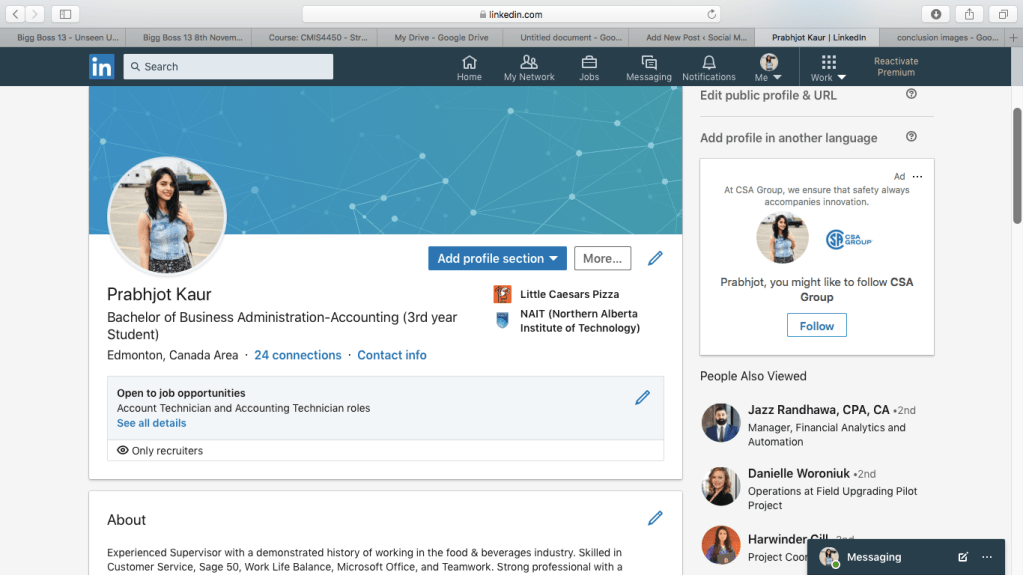
Explore Potential career and companies- looking for potential jobs as on LinkedIn there is :
Company insights – It is a tool to look at any company insights which can be useful for analysis if you want to know more about a company before applying for a position there. Filters can be used to dig deeper to find out something about a company, such as its growth.
You have the option to make your account a premium that gives some benefits. A basic account which is free is still a good tool. You can consider a free trial of premium account. For students it is not that viable as you have to pay for it. This section also includes privacy settings and how to manage your account. Data of your account can be downloaded if you choose to delete your account someday.

Overall this video course taught us the importance of LinkedIn profile and how students can make best out of it to enhance their career. I have my own LinkedIn account but that is very basic and is mostly at default settings. I got to learn a lot about how I can improve my profile and make it reach out to people or companies that I want to work with in the future.
Keeping an updated LinkedIn profile is very crucial in today’s fast paced business environment. If any student is introvert in nature and does not go out to networking events, it will be harder for that student even if he gets a higher GPA in his studies. Nowadays, most companies hire new talent through referrals and networking events. Thus LinkedIn is an important tool especially for students to present themselves in front of future employers.
Schinken, O. (2018, March 14). Learning LinkedIn for students. Retrieved from: https://www.linkedin.com/learning/learning-linkedin-for-students/welcome?u=2109516
In the Video, “Advertising on Facebook” by Megan Adams, we get to learn some basic tips and tricks that are important to advertise on Facebook. She started her video by sharing some common pitfalls, which are necessary to save time and money. First of all it is important to know why you are advertising, for what product and then learn how to create and craft a strategy for your advertisement. Sponsored ads are a part of paid promotion. Facebook Ad is a powerful tool when it is being used in alignment with your business’s market goal and strategy (Adams, 2019). A beginner needs to learn how to create ads that make sense and reach out to the intended audience. Primary objective is to drive traffic to the landing page.
Facebook is a great way to with your customers where they are already active and engaged. Facebook ads manager is a tool that helps in setting up your account and managing it afterwards. It is easy to create your account and also prices are very flexible. First of all, you need to find your goal of advertising- is it to promote an online store? You want people to install your app? And you just want to increase your likes and comments on your page? Then define your budget and finally decide how you want to pay for those ads. Learn from others, look at what other advertisers are doing.
There are many reason to choose Facebook platform to advertise. few of those reasons are as follows:
A) Number of Users: Facebook has over 2.37 billion users, thus making this a huge platform for people to market their products or a news. Facebook has users of all ages from baby boomers to Millennials.
B) Price: Facebook provide flexible price for advertisers as there are options to choose or set a budget that you want to spend on a monthly basis.
C) Easy to Use: Facebook is a huge platform as it has over 2.37 billion users, which make it easier for businesses to reach out to these prospective customers. It is very easy to manage your account and use tools to handle take full advantage of this service.
It is important to learn how these ads work, Adams (2019), has mentioned about ad guides in her video. According to her ad guide outlines different ad types, their purpose and even shows how these ads look. There are three main section on this Facebook page which are as follows:
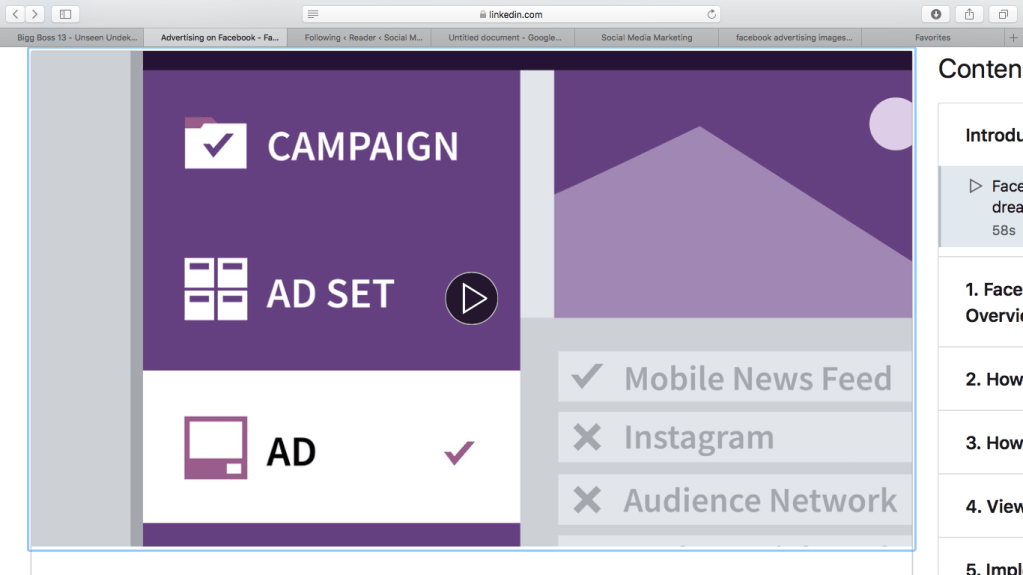
1) Campaign– It defines your primary objective. Which can be further described as follows:
2) Ad Set– determine the audience and placement of ads, who are you targeting? There are option to choose from your target audience. It is crucial to select your appropriate audience.
3)Ad – This section includes creating the ads itself, which can have images, text, videos, links to another websites etc.
On Facebook, there are a lot of options to select your targets for your advertisement. Facebook collects a lot of information from its users that is then used to target audience in various ways. Some factors are involved in it which are described as follows:
There are few different sections which were described in the video by Adams (2019), which are as follows:
A) How to set up an account: This section includes setting up a basic account first and then navigating through all settings.
B) Identify your Audience: Before advertising about your products, it is necessary to select your target audience first. Set up age, gender, location, language, and there is limited options to select cities but selecting a country is mandatory. There are two main type of audience which are described in the video.
Refine your audience with interest targeting
Refine your audience with behaviour targeting, which includes– demographics, shopping habits, travel, additional behaviour option to select from.
Choose a budget for your ads
Start small in the beginning– There is budget option under the tools to manage and control your budget.
Cost control option- This is an option to control cost and there is info icon to get more information about cost controlling.
Budgeting and Scheduling- There is an option to set budget and schedule spending with the options of daily and lifetime spending budget.
Creating advertising reports
How to choose an effective image for your ad: Following are some of the tips mentioned in the video by Adams, (2019):
Improve the performance of your ads
Overall, in this video by Adams, we got to learn about the usefulness of advertising on Facebook. The speaker talked about basics to teach his listeners about how to setting up your account and then went in dept about managing your account and some basic policies & procedures. Personally, i found some interesting ads over the years on my facebook page, although i never bought anything after getting influenced by those ads.
However, I find it interesting that how people especially the businesses are using social media such as Facebook to advertise their products or business as facebook is meant for people to connect with their friends worldwide. Eventually, i got to learn a lot about how i can use a social media site to advertise.
Adams, M. (2019). Advertising on Facebook. Retrieved from https://www.linkedin.com/learning/advertising-on-facebook-2/facebook-is-an-advertiser-s-dream?u=2109516

Copywriting according to wikipedia is defined as “Writing copy for the purpose of advertising and marketing”. The main intention of the copy writes is to sell, and call for an immediate action of it’s audience. In the video Ian Laurie, “It delivers value to people when they most need it”.
Ian Laurie has explained his viewers what is copy writing and how to prepare before writing. There are few key elements to copywriting which includes delivering significance, persuasive writing, and visually appealing (Lurie, 2014). It is necessary to understand the target audience before writing any copy for marketing as these marketing copywriting are to promote and sell some products. Product description is mostly done when customer is in buying process (Lurie, 2014).

You need basic tools before starting writing such as timer, water, a proper software/gadget, and back up/storage (Lurie, 2014). Moreover, a right mindset to prepare yourself to write is necessary as it gives you positive and good start. After that you need to plan, which includes making notes about audience, list of collateral, list of styles that you want to use (Lurie, 2014). Then start with free writing and put your ideas on the paper without erasing it. This will give you content, a broader vision as well as new ideas.
It is also important to take breaks in between to keep the energy and excitement high. Try to finish big chunks or sections in one sitting. This will be your first draft one you done with main sections, review it and make sure you are not missing out any important information. Lurie (2014), encourages to do the introduction and conclusion at the very end as these two need to based on the main body/content. The speaker also talked about general rules of copywriting such as addressing the reader, quality of content, not to use sarcasm, also the importance of headlines.
Rewriting an existing or someone else’s copy is just like giving someone second opinion or view point and the main reason behind it to make improvements without actually restructuring the whole content (Lurie, 2014). Ian Laurie has provided some tips to make this rewriting most impactful and to make this happen, a good writer can ask for details and context about the topic to get some insights. Some of the good tips from the video are, looking for some unessential words to make the copy concise, making some edits to convert passive to active voice, and finally proofreading (Lurie, 2014). The speaker also talked about the typography and its impact as it makes it easier to understand the content and also the point of view of the designer (Lurie, 2014).

To become a good copywriter, first it is important to become a critical reader. Ian Laurie has described a critical reader as someone who understand, interpret and respond to things accordingly (Lurie, 2014). To provide an applied example of how to implement an idea from the summary, the preparation of writing part would fits here properly. Writing is an art and one has to prepare his mindset before starting to write. Furthermore, making time slots to write and taking breaks in between and making sure to finish a chunk of a section in that allocated time frame is a big start of becoming a copy writer. Starting with free writing and then writing first drafts are the important steps of this writing stage and also the importance of headlines (Lurie, 2014). To conclude, Ian Laurie has demonstrated basics to advanced level and tips of marketing copywriting in a very simple but exemplary way.
References
Lurie, I. (2014, May 30). Learning to Write Marketing Copy.
This is an example post, originally published as part of Blogging University. Enroll in one of our ten programs, and start your blog right.
You’re going to publish a post today. Don’t worry about how your blog looks. Don’t worry if you haven’t given it a name yet, or you’re feeling overwhelmed. Just click the “New Post” button, and tell us why you’re here.
Why do this?
The post can be short or long, a personal intro to your life or a bloggy mission statement, a manifesto for the future or a simple outline of your the types of things you hope to publish.
To help you get started, here are a few questions:
You’re not locked into any of this; one of the wonderful things about blogs is how they constantly evolve as we learn, grow, and interact with one another — but it’s good to know where and why you started, and articulating your goals may just give you a few other post ideas.
Can’t think how to get started? Just write the first thing that pops into your head. Anne Lamott, author of a book on writing we love, says that you need to give yourself permission to write a “crappy first draft”. Anne makes a great point — just start writing, and worry about editing it later.
When you’re ready to publish, give your post three to five tags that describe your blog’s focus — writing, photography, fiction, parenting, food, cars, movies, sports, whatever. These tags will help others who care about your topics find you in the Reader. Make sure one of the tags is “zerotohero,” so other new bloggers can find you, too.
 Social Media Marketing