In this video by Megan Adams (2018), “Social Media Marketing: Social CRM” I got to learn about social CRM fundamentals- Adding Social CRM to your strategy
In this video by Megan Adams (2018), “Social Media Marketing: Social CRM” I got to learn about social CRM fundamentals- Adding Social CRM to your strategy
All the information is collected from the social media sources and uses CRM analytical tools in the strategy
1) Marketing- Social listening to learn about your online audience’s behavior, i.e. sproutsocial.com
2) Sales- Understand where prospects are online and what they’re discussing
3) Customer service and support- Real-time, multi-channel support
4) Customer experience- Understanding what your customers’ needs and wants are and creating an exceptional, unique experience for them.
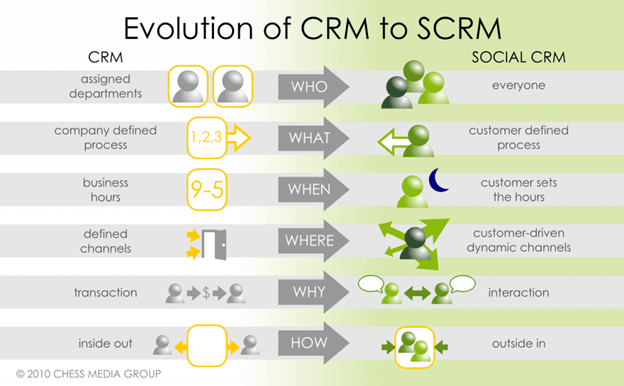
Traditional CRM and social CRM are combining as customers spend more time online and on different social media channels like Facebook, LinkedIn, Instagram, and Twitter. Following is a picture showing the evolution of Traditional CRM to Social CRM.
Budget
- Invest in growth
- Use analytics to drive business case
- Benefit to sales, marketing, and customer support
- Work with your Social CRM provide
Key Takeaway:Work with the customers that love your brand by giving them a voice and a platform.
Connect Your Content with Prospects
- Social Media
- Allows prospects to investigate on own time, with no sales pitch
- Provide exceptional value
Get Started
What is Social CRM? It is a strategy supported by social media, online tools, and technology that enables organizations to better engage with their customers. It helps to create a culture of advocacy, empowering your customer to shape their own experience with your organization. The right strategy and set of social CRM tools will help your organization use all of this social information to establish meaningful and transparent relationships with your customers (Adams, 2018).
How does it work?
- Social CRM applies to marketing, customer service, support, and your organizational sales engagement.
- Social CRM creates better and more powerful social engagement.
- Social customer service.
- 24/7 service
- Customers choose preferred mode of communication.
- Tracks social media and online activity of prospects and customers.
- Provides a full picture of interaction and engagement with your organization.
- Allows you to act faster, individualize customer experiences, and anticipate their needs.
Examples:
- Asks question on Twitter
- Leaves Yelp review
- Sends Facebook message
- Begins online chat with customers service agent.
The new way of marketing CRM is used for tracking, measuring, and analyzing behavior over social landscape is becoming more difficult. According to traditional CRM, it build systems for customers to interact with whereas new social CRM build systems that allows customers to choose the way they interact with the organization (Adams, 2018).
Benefits of Social CRM
- More meaningful engagement
- Creation of brand advocates
- Collection of important data
- Helps construct brand’s image and conversations online.
Choose a social CRM platform A social CRM platform gives your organization all the tools it needs to grow, all in one central location. There are 3 main reasons to use a social CRM platform (Adams, 2018).
- Sales- looking to automate and boost sales
- Marketing – Looking to streamline finding and engaging with customers and prospects
- Customer service and support- Looking to deliver outstanding and responsive customer support.
What to look for in a Social CRM Platform
- Business size
- Ease of use
- Features: sales, marketing, customer support
- Integrations
- Total cost, including setup fees and additions of users
- Security features
- Customers support: 24/7, email, phone
CRM Platform must have following elements to it:
- Support for social media platforms that your organization is using
- Brand monitoring
- Social CRM analytics
- Integration with your other platforms or services
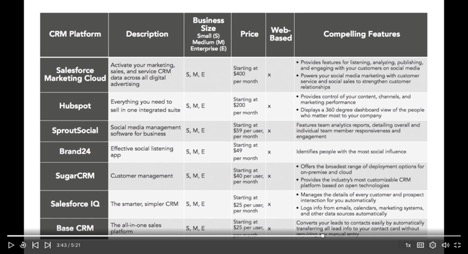
Choosing a Platform after shortlisting few platforms
- Take them for a test drive
- Sign up for a live demo or free trial
Allocating Resources: Your social CRM success will depend upon organizational support and allocation of resources
Leadership Support:
- Top-level support and buy-in.
- Identify decision makers and influencers.
- Making your business case.
Organizational strategy and culture
- Ensure alignment with organizational strategy and goals.
- Consider the implications: Change in culture, process, and technology
Build your Social CRM Team
- Staff your social CRM team with early adopters
- Determine the roles and required headcount
- Invest in your social team
Training
- Look to your social CRM provider for training opportunities
- Direct resources to new initiatives
- Support your social CRM team
Monitor and Evolve
- Monitor social CRM activities
- Additional support may be required
- Evaluate the performance of the social CRM platform and strategy
Develop Your Strategy
Branding – a social and effective social CRM strategy builds an organization’s brand while creating fans and brand ambassadors. A brand is an overall impression resulting from communication and marketing methods of a product or company that distinguishes it form competitors.
Brand Includes:
- Personality and persona
- Examples: Starbucks and burger King
It has two factors – Humanization and personalization
Humanization- It includes having an easy to connect with personality versus being a faceless entity.
- People connect with people
- Join in on the conversation people are having about your brand
- Example: Zappos service
Personalization- it includes allowing customer sot choose and shape their own experience with your brand.
- Allowing customers to choose how they experience your brand
- Example: Pandora
Tracking Brand Consistency
- Track your brand’s sentiment across all social platforms
- See how your messaging is resonating with your intended audience
Supporting your Customers
- Determine value in all social media conversations with customers, leads, and brand advocates
- Collaborate with customers and fans
Social Media Optimization
- Integrate your social platforms with marketing, sales, and customer service
- Cohesive campaigns
- 360-degree view
Rules of Engagement Laying out clearly defined rules will set the standard for every prospect and customer interaction. Defined rules of engagement gets your organization on the same page in all of their social CRM activities while invoking trust and transparency on the customer side (Adams, 2018).
- Tone and personality
- Set response to specific situations
- Personalized responses
- Guidelines for communicating company-wide announcements
Communicate How to be Reached

All the information is collected from the social media sources and uses CRM analytical tools in the strategy
1) Marketing- Social listening to learn about your online audience’s behavior, i.e. sproutsocial.com
2) Sales- Understand where prospects are online and what they’re discussing
3) Customer service and support- Real-time, multi-channel support
4) Customer experience- Understanding what your customers’ needs and wants are and creating an exceptional, unique experience for them.
Traditional CRM and social CRM are combining as customers spend more time online and on different social media channels like Facebook, LinkedIn, Instagram, and Twitter. Following is a picture showing the evolution of Traditional CRM to Social CRM.
Budget
- Invest in growth
- Use analytics to drive business case
- Benefit to sales, marketing, and customer support
- Work with your Social CRM provide
Key Takeaway:Work with the customers that love your brand by giving them a voice and a platform.
Connect Your Content with Prospects
- Social Media
- Allows prospects to investigate on own time, with no sales pitch
- Provide exceptional value
Get Started
What is Social CRM? It is a strategy supported by social media, online tools, and technology that enables organizations to better engage with their customers. It helps to create a culture of advocacy, empowering your customer to shape their own experience with your organization. The right strategy and set of social CRM tools will help your organization use all of this social information to establish meaningful and transparent relationships with your customers (Adams, 2018).
How does it work?
- Social CRM applies to marketing, customer service, support, and your organizational sales engagement.
- Social CRM creates better and more powerful social engagement.
- Social customer service.
- 24/7 service
- Customers choose preferred mode of communication.
- Tracks social media and online activity of prospects and customers.
- Provides a full picture of interaction and engagement with your organization.
- Allows you to act faster, individualize customer experiences, and anticipate their needs.
Examples:
- Asks question on Twitter
- Leaves Yelp review
- Sends Facebook message
- Begins online chat with customers service agent.
The new way of marketing CRM is used for tracking, measuring, and analyzing behavior over social landscape is becoming more difficult. According to traditional CRM, it build systems for customers to interact with whereas new social CRM build systems that allows customers to choose the way they interact with the organization.
Benefits of Social CRM
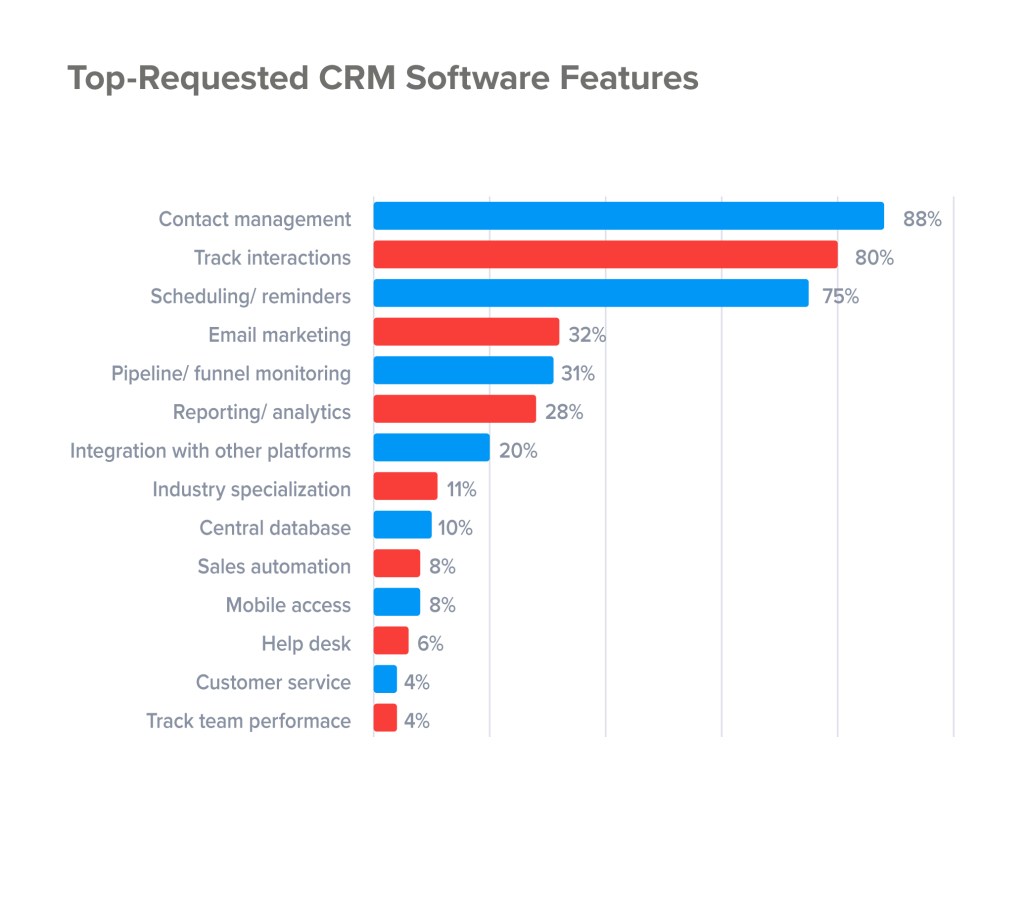
- More meaningful engagement
- Creation of brand advocates
- Collection of important data
- Helps construct brand’s image and conversations online.
Choose a social CRM platform A social CRM platform gives your organization all the tools it needs to grow, all in one central location. There are 3 main reasons to use a social CRM platform
- Sales- looking to automate and boost sales
- Marketing – Looking to streamline finding and engaging with customers and prospects
- Customer service and support- Looking to deliver outstanding and responsive customer support.
What to look for in a Social CRM Platform
- Business size
- Ease of use
- Features: sales, marketing, customer support
- Integrations
- Total cost, including setup fees and additions of users
- Security features
- Customers support: 24/7, email, phone
CRM Platform must have following elements to it:
- Support for social media platforms that your organization is using
- Brand monitoring
- Social CRM analytics
- Integration with your other platforms or services
Choosing a Platform after shortlisting few platforms
- Take them for a test drive
- Sign up for a live demo or free trial
Allocating Resources: Your social CRM success will depend upon organizational support and allocation of resources
Leadership Support:
- Top-level support and buy-in.
- Identify decision makers and influencers.
- Making your business case.
Organizational strategy and culture
- Ensure alignment with organizational strategy and goals.
- Consider the implications: Change in culture, process, and technology
Build your Social CRM Team
- Staff your social CRM team with early adopters
- Determine the roles and required headcount
- Invest in your social team
Training
- Look to your social CRM provider for training opportunities
- Direct resources to new initiatives
- Support your social CRM team
Monitor and Evolve
- Monitor social CRM activities
- Additional support may be required
- Evaluate the performance of the social CRM platform and strategy
Develop Your Strategy
Branding – a social and effective social CRM strategy builds an organization’s brand while creating fans and brand ambassadors. A brand is an overall impression resulting from communication and marketing methods of a product or company that distinguishes it form competitors (Adams, 2018).
Brand Includes:
- Personality and persona
- Examples: Starbucks and burger King
It has two factors – Humanization and personalization
Humanization- It includes having an easy to connect with personality versus being a faceless entity.
- People connect with people
- Join in on the conversation people are having about your brand
- Example: Zappos service
Personalization- it includes allowing customer sot choose and shape their own experience with your brand.
- Allowing customers to choose how they experience your brand
- Example: Pandora
Tracking Brand Consistency
- Track your brand’s sentiment across all social platforms
- See how your messaging is resonating with your intended audience
Supporting your Customers
- Determine value in all social media conversations with customers, leads, and brand advocates
- Collaborate with customers and fans
Social Media Optimization
- Integrate your social platforms with marketing, sales, and customer service
- Cohesive campaigns
- 360-degree view
Rules of Engagement Laying out clearly defined rules will set the standard for every prospect and customer interaction. Defined rules of engagement gets your organization on the same page in all of their social CRM activities while invoking trust and transparency on the customer side.
- Tone and personality
- Set response to specific situations
- Personalized responses
- Guidelines for communicating company-wide announcements
Communicate How to be Reached
1) Social bio: Include appropriate customer support numbers and emails.
2) Website and social channels: Make it clear how to make contact and the experience response time.
Create Social Media Support Accounts
- Create dedicated support accounts to help centralize social CRM activity
- Example: @XboxSupport
Respond in a timely Manner
Creating a social CRM strategy to aid in timely response:
- Shows commitment to customer
- Builds a positive image
Be Proactive in your responses
- Communicate issues that will affect customer base, like outages, etc.
- Provide consistent updates until issue is resolved
- Demonstrate you are on top of the issue
Use a Social Media Monitoring Tool
- Monitors your brand consistency
- Helps you quantify your brand’s sentiment
- Helps mitigate and avoid negative reputation
- Example: www.keyhole.co
Humanize Your Conversation
- Let people know they are talking to a real person
- Example: Adding support agent’s initials to tweet
- Example: Account bio can include community manager names and twitter handles
Know When to take it offline
1) Move to secure communication platforms when appropriate
2) Always keep privacy and safety in the forefront
Get Feedback Often
- Ask your customers for feedback
- Example: “How did we do?”
Campaigns This new way of marketing is a powerful opportunity for marketers to engage with their customers on the platforms they are active on, in a targeted and highly effective way (Adams, 2018).
Focused targeting – Creating highly individualized and targeted messages that strongly appeal to the customers
Segmentation- Aggregating customers or prospects into segments, such as behaviors.
Personalized Content- Individual and tailor your content to directly speak to your customers.
Iterate- Experiment, analyze, tweak, repeat, iterate on what doesn’t work and repeat what does.
Social Media channels- upload CRM data to social channels like Facebook or Twitter in order to run targeted ad campaigns (Adams, 2018).
Manage Social CRM
Identify Influencers: Using influencers in your marketing strategy is the practice of building relationships with the people who can build relationships for your brand. First, look at audience and advocacy (Adams, 2018).
- Relevance: How relevant is their message and network to yours?
- Reach: How many people can they reach with their message?
- Engagement: How engaged is their network?
How to find influencers?
Social media monitoring: use social listening tools like hootsuite.com or klout.com; larger CRMs like HubSpot also have these capabilities.
Hashtags: Identify hashtags relevant for your brand and see who is talking about them.
Google Alerts: Set alerts for specific keywords, services, and products.
Blogger outreach: Locate influential bloggers in your niche.
Working with your influencers
Encourage content creation:
- Post photos and videos of them using your products/services
- Example: ModCloth ambassadors
Provide product giveaways and discounts:
- Keep them current with your latest products, or provide compensation or discounts
How to engage with prospects successfully? Paint a complete picture of who they are.
Understanding your prospects
- Where are they in the sales cycles?
- What previous interactions have they had with your organization?
- Data helping you understand how they can provide the best value for the stage they are in.
Connect Your Content with Prospects
- Social media
- Allows prospects to investigate on own time, with no sales pitch
- Provide exceptional value
- Builds credibility and trust
Keep Content on Message
- Work with your marketing department
- Understand the problems your organization solves
- Know your customer’s pain points
- Use this content to help solve your customer’s problem
Keep Content Engaging
- Provide content that helps improve your customer’s life
- Monitor trending topics online
- Listen to what your customers are saying online
Know when to pitch and what to not
- A sales pitch is not always appropriate. Know when it is, and when it isn’t.
- Watch tone and messaging
- Lead with value
Use a Social CRM Tool
- Uses lead scoring to quantify the level of the relationship a prospect has with your brand
- Know when to engage, how to engage and who from your organization is best suited to engage.
- Strengthens your relationship to your prospect and improve conversion rate.
Customer service
It is the interaction between a customer and the company, usually through traditional channels like phone or email, to help resolve a customer request or issue.
Social CRM
- Customer Retention- Facilitating support in the customer’s preferred environment
- Issue prevention- Intervening before the issue is escalated
Best Practices Helps build a scalable, repeatable, and automatic customer support process addressing issues that surface via social channels.
- Monitor- Understand what is being said about your brand
- Identify- Determine if the problem your customer is facing is product, service, user support
- Contact- Take real-time action and reach out immediately
- Acknowledge loyal customers
- Intelligent relationship routing
- Handle channel hoppers
Handling Negative Feedback
1) Monitor internet for activity
2) Bring relevant postings into customer support queue
3) Facilitate employee collaboration
4) kick off resolution with the customer
Your Toolkit
Process Documentation: Documents that support a process, the activity of process discovery, process mapping software and policies, as well as procedure templates.
Business Process Success Criteria
1) Ownership
2) Goals
3) Metrics
4) Interfaces
5) Documentation
6) Integrity
7) Alignment with business vision
Start with the Roadmap
- Create new standard for optimizing customer relationships, focusing on new systems and customer experiences
- Build connections with customers via new technologies: focus on human-driven interaction
- Leverage new channels to create more personal communication to achieve targeted and human approach
Impact to Specific Organizational Process
- How will you handle the social insight?
- What will the impact be on sales, marketing, and customer service?
- How and when will you perform social media community monitoring?
- How will you filter insight and data coming from the social media monitoring activities?
- What is the best way to integrate this social insight into your organization’s social CRM platform?
Choosing the Right Tools
- Process documentation trumps tools
- Choose tools that will support where the work is being done
- Internal portal, wiki, shared Google document, process documentation system, or Social CRM platform
Analytics- Main takeaways
- Start small- Stick to the basics and iterate
- Every organization will have different analytical frameworks and goals
Focus On customer Feedback
- What are customers saying to your organization?
- What are customers saying about your organization?
Behaviour and Psychographics
- 360 degree view of the customer
- Behavior: Social presence, purchasing patterns, online buying behavior
- Psychographic: Buyer preferences, tracking customers to see where they spend their time
Essential Analytics
Analytics help you gain a deeper understanding of your customer so that you can better meet their needs (Adams, 2018).
- Engagement levels
- Customer satisfaction score
- Customer lifetime value
Conclusion
The right social CRM tools and strategy will empower your organization in establishing meaningful and transparent relationships with your customers. It is important to understand your organizational goals about social CRM. What social CRM tools will you require? Above are the important tips that I have learned from the video by Adams. To provide an example, I would say I work in service industry and I have seen the use and advantage of using data and information collected from customers to enhance the business and run it effectively and efficiently. To put it in a nutshell, Social CRM is a tools that helps an organization to better engage with its customers for the sake of customers and the organization as well.
Reference
Adams, M. (2018, April 11). “Social Media Marketing: Social CRM” [Video]. Retrieved from https://www.linkedin.com/learning/social-media-marketing-social-crm/welcome?u=2109516
Malczan, N. (2019, May 28). What is Social CRM and how can it help your B2B efforts. [Image]. Retrieved from https://www.engagebay.com/blog/what-is-social-crm/
Fletchers, R.F. (2019, January 25). How to Give Negative Feedback. [Image]. Retrieved from http://executivesecretary.com/how-to-give-negative-feedback/
Puri, R. (2015, August 13). 3 Creative Ways to Choose a Brand Name.[Image]. Retrieved from https://thenextweb.com/insider/2015/08/13/3-creative-ways-to-choose-your-brand-name/
Plaksij, Z. (2020, February 28). CRM Benefits. [Image}. Retrieved from https://www.superoffice.com/blog/crm-benefits/
 Social Media Marketing